AI-Powered Station Unlocks Wild Primate Minds in Costa Rican Forests
Scientists are deploying "CapuchinAI," a portable, AI-driven testing station, in Costa Rica's forests to study wild primate intelligence. Equipped with a touch screen and facial recognition, this innovative tool allows capuchin monkeys to engage with cognitive challenges in their natural habitat. This groundbreaking research promises to deliver unprecedented insights into primate learning, memory, and problem-solving, with implications for evolution and conservation.
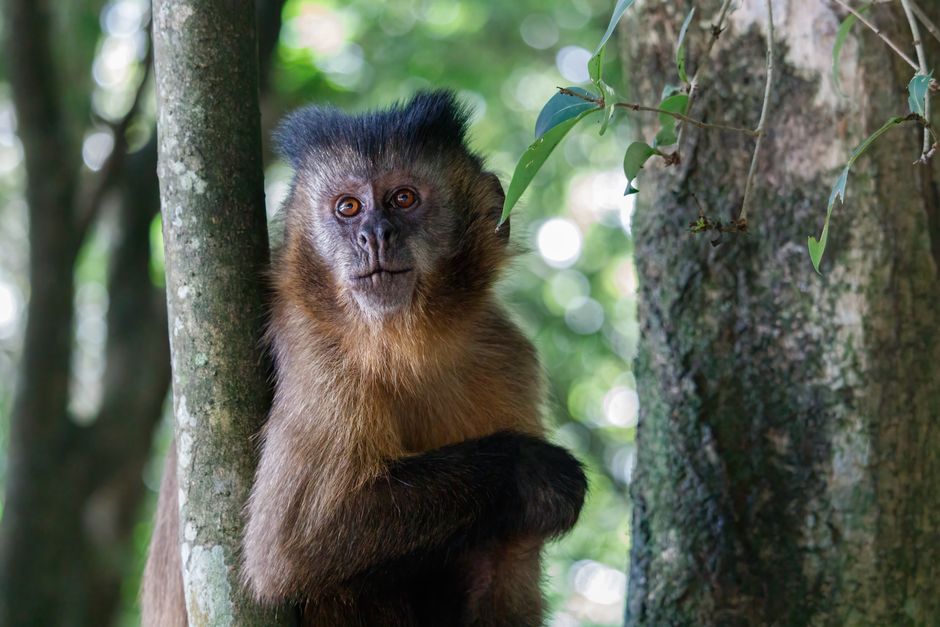
Key Points
- •Innovative Research Tool: CapuchinAI is a portable, AI-powered testing station specifically developed to study the intelligence of wild primates in their natural Costa Rican forest habitat.
- •Advanced Technological Integration: The system incorporates a durable touch screen for presenting cognitive challenges and sophisticated facial recognition software to identify and track individual capuchin monkeys.
- •Bridging Scientific Gaps: This project enables scientists to conduct cognitive studies directly in natural environments, overcoming limitations of traditional laboratory settings and gathering more ecologically relevant data on primate behavior.
- •Deepening Understanding of Primate Cognition: The initiative aims to provide unprecedented insights into capuchin monkeys' learning abilities, memory, and problem-solving skills as they navigate their everyday surroundings.
- •Broader Scientific and Conservation Implications: Data collected through CapuchinAI can significantly advance our understanding of cognitive evolution, inform effective conservation strategies, and potentially inspire similar research methodologies for other wild species.
The intersection of advanced technology and wildlife research is reaching new frontiers, particularly in the lush tropical forests of Costa Rica. Here, a groundbreaking project is allowing scientists to observe primate intelligence in an unprecedented manner. Dubbed "CapuchinAI," this innovative system is a portable, self-contained testing station meticulously designed to bring advanced cognitive studies directly into the natural habitat of wild capuchin monkeys.
Traditionally, a significant portion of our understanding of primate cognition has stemmed from observations conducted in controlled laboratory environments or through more indirect field methods. While these approaches have yielded valuable insights, they can sometimes struggle to capture the full spectrum of behaviors and complex problem-solving abilities exhibited by animals within their natural ecological contexts. CapuchinAI aims to bridge this critical gap by offering a non-invasive, interactive platform for direct data collection in the wild.
At its core, the CapuchinAI unit features a robust, animal-friendly touch screen interface coupled with sophisticated facial recognition software. Researchers can remotely program the device to present a variety of cognitive challenges or puzzles to the naturally curious capuchin monkeys. As a monkey approaches and interacts with the station, the facial recognition technology can identify individual primates, enabling precise longitudinal studies of specific animals over extended periods. When a monkey engages with the touch screen, attempting to solve a task, its responses are meticulously recorded and analyzed, providing rich, real-time data on their learning capabilities, memory retention, and decision-making processes.
This novel approach promises to unlock deeper insights into the complex minds of capuchins and potentially pave the way for similar studies with other primate species. By observing how these highly intelligent animals adapt to and solve novel problems within their own environment, scientists can gain a more accurate and ecologically relevant understanding of the evolutionary pressures that shaped their cognitive abilities. Such pioneering research has significant implications not only for fundamental science, enhancing our knowledge of animal cognition, but also for critical conservation efforts, as a better grasp of an animal's cognitive processes can inform more effective strategies for habitat preservation and species management. The inherent portability of CapuchinAI ensures that research can be conducted with minimal disruption to the monkeys' natural routines, fostering a more ethical and ecologically sound method of inquiry into the fascinating world of primate intelligence. This innovative blend of cutting-edge artificial intelligence with field biology represents a substantial leap forward in understanding animal minds.